Board index » Talking About Stuff » Suzuki Talk
Print view
Previous topic | Next topic
| Author |
Message |
lump_a_charcoal

az supporter


Joined: Wed Feb 28, 2007 10:30 pm Posts: 4454 Location: Botany, NSW
Vehicle: MY2019 Jimny

|
 Posted: Thu Jul 01, 2010 1:42 am |
|
|
Yeah, I think that may be the case.
|
|
|
|
|
BlueSuzy
az supporter

Joined: Sun May 04, 2008 11:30 pm Posts: 9716 Location: NSW
Vehicle: SJ51 LWB, SJ70 SWB
|
Posted: Thu Jul 01, 2010 1:43 am |
|
_________________ BlueSuzy wrote: I'm over the G16b's.
|
|
|
|
|
Fatzook
az supporter

Joined: Sat Oct 27, 2007 11:30 pm Posts: 14977 Location: The Hills
Vehicle: Vitara, NGV
|
Posted: Thu Jul 01, 2010 2:17 am |
|
|
you need to be careful when 'Inverting' shocks as not all shocks will operate in this orientation. I know emulsion shocks ( Fox, FOA, Kings etc) are manufactured to be inverted, but cannot be run in the convention orientation.( body at the bottom, piston at the top).
I'm sure there is some rule about gas and oil shocks aswell.
Inboarding just allows for the fittment of a longer shock, while reducing the risk of 'bottoming' the shockie, and wrecking the valve.
Pete
_________________
2013 GV
1998 SV420 ute
|
|
|
|
|
Red89
Joined: Tue Jan 12, 2010 10:30 pm Posts: 2801 Location: Perth
|
Posted: Thu Jul 01, 2010 7:33 am |
|
tanshi wrote: lump_a_charcoal wrote: Yeah that's what I thought, but I couldn't see why you would get more travel. Laying them over or inboarding, allows you to get more shock length in, therefore allowing for more travel Only if there is more travel available in the spring 
|
|
|
|
|
just_cruizin
az supporter
Joined: Sun Jun 25, 2006 11:30 pm Posts: 2867 Location: here
|
Posted: Thu Jul 01, 2010 11:21 am |
|
Fatzook wrote: you need to be careful when 'Inverting' shocks as not all shocks will operate in this orientation. I know emulsion shocks ( Fox, FOA, Kings etc) are manufactured to be inverted, but cannot be run in the convention orientation.( body at the bottom, piston at the top).
I'm sure there is some rule about gas and oil shocks aswell.
Inboarding just allows for the fittment of a longer shock, while reducing the risk of 'bottoming' the shockie, and wrecking the valve.
Pete
Oil and gas shocks can't be run upside either. They don't even work as a steering dampener on their side. Oil ends up in the wrong place.
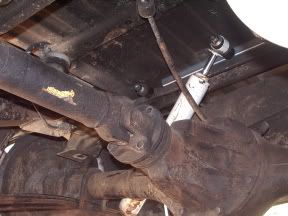
This is an inboarded shock.
|
|
|
|
|
shakes

Joined: Sat Apr 10, 2010 11:30 pm Posts: 4895 Location: Northcote
|
Posted: Sun Jul 11, 2010 12:41 pm |
|
|
Just adding to a topic I have a lot of learning to do in yet.
Can a leaf spring of a certain length flex any differently to a comparable leaf of another brand given that everything is the same age/rate/thickness etc?
I guess what I'm asking is one particular brand flexier than another or is it much of a muchness providing the pack size, spring rate, and length are the same?
|
|
|
|
|
alien
Joined: Wed Mar 24, 2010 10:30 pm Posts: 16343 Location: Perth
Vehicle: '92 Sierra, 1.6efi, SPOA, 31s.
|
Posted: Sun Jul 11, 2010 1:22 pm |
|
|
you answered your own question - all the manufacturers have slightly differing specs on their leaves... some are stiffer but longer, others softer and shorter... etc.
_________________ 
|
|
|
|
|
Gwagensteve

Joined: Thu Feb 26, 2009 10:30 pm Posts: 13007 Location: Melbourne
|
Posted: Sun Jul 11, 2010 11:27 pm |
|
shakes wrote: Just adding to a topic I have a lot of learning to do in yet.
Can a leaf spring of a certain length flex any differently to a comparable leaf of another brand given that everything is the same age/rate/thickness etc?
I guess what I'm asking is one particular brand flexier than another or is it much of a muchness providing the pack size, spring rate, and length are the same?
You're into the realm of Young's modulus in that case. If age, pack size, spring rate and length are the same, changes in "flexiness" will be due to changes in the composition or working of the steel. Whilst these are real and measurable, they are also very small. "Steel" is given the same approximate number (as a rough guide) so the variations will be relatively small.
The problem is that it's basically impossible to remove all the variables between two different leaf manufacturers except the steel. Pack size, spring rate and length also bring up a range of design issues - radius of the ends, taper on the leaves, radius of the leave edges, etcetc. Also, some design factors that result in improved flex result in reduced durability - like not having a full length secondary leak.
As an aside, it has been said many times that the most durable leaf springs are factory japanese springs. Many desert travellers who run heavily laden cars for thousands of KM of corrugations won't use aftermarket leaves dues to the failure rate. I suspect japanese steel is superior to Aus made steel, and has been for many years.
Steve.
|
|
|
|
|
lump_a_charcoal
az supporter
Joined: Wed Feb 28, 2007 10:30 pm Posts: 4454 Location: Botany, NSW
Vehicle: MY2019 Jimny
|
Posted: Sun Jul 11, 2010 11:33 pm |
|
|
Well they make better samurai swords...
|
|
|
|
|
shakes
Joined: Sat Apr 10, 2010 11:30 pm Posts: 4895 Location: Northcote
|
Posted: Sun Jul 11, 2010 11:44 pm |
|
Gwagensteve wrote: shakes wrote: Just adding to a topic I have a lot of learning to do in yet.
Can a leaf spring of a certain length flex any differently to a comparable leaf of another brand given that everything is the same age/rate/thickness etc?
I guess what I'm asking is one particular brand flexier than another or is it much of a muchness providing the pack size, spring rate, and length are the same? You're into the realm of Young's modulus in that case. If age, pack size, spring rate and length are the same, changes in "flexiness" will be due to changes in the composition or working of the steel. Whilst these are real and measurable, they are also very small. "Steel" is given the same approximate number (as a rough guide) so the variations will be relatively small. The problem is that it's basically impossible to remove all the variables between two different leaf manufacturers except the steel. Pack size, spring rate and length also bring up a range of design issues - radius of the ends, taper on the leaves, radius of the leave edges, etcetc. Also, some design factors that result in improved flex result in reduced durability - like not having a full length secondary leak. As an aside, it has been said many times that the most durable leaf springs are factory japanese springs. Many desert travellers who run heavily laden cars for thousands of KM of corrugations won't use aftermarket leaves dues to the failure rate. I suspect japanese steel is superior to Aus made steel, and has been for many years. Steve. thanks Steve!
|
|
|
|
|
lump_a_charcoal
az supporter
Joined: Wed Feb 28, 2007 10:30 pm Posts: 4454 Location: Botany, NSW
Vehicle: MY2019 Jimny
|
Posted: Thu Aug 12, 2010 7:12 am |
|
|
So, how about CJ springs?
From my dodgy research, late model front CJ springs are OK?
|
|
|
|
|
Gwagensteve
Joined: Thu Feb 26, 2009 10:30 pm Posts: 13007 Location: Melbourne
|
Posted: Thu Aug 12, 2010 7:36 am |
|
|
The advantage of CJ springs is that they are 50mm wide. Not the easiest to get though - freighting heavy, bulky springs ex US isn't the best plan.
Steve.
|
|
|
|
|
lump_a_charcoal
az supporter
Joined: Wed Feb 28, 2007 10:30 pm Posts: 4454 Location: Botany, NSW
Vehicle: MY2019 Jimny
|
Posted: Thu Aug 12, 2010 7:52 am |
|
|
Yeah - I agree.
I called Wooders in Hornsby, they have them all listed, but there are numerous different types. from my research, they are all the same length, be it front or rear, the only variance is the number of leafs.
Sorta leaning towards YJ springs now - sure they are wider, but many reckon that helps with axle wrap.
|
|
|
|
|
|
Who is online
Users browsing this forum: Google [Bot] and 782 guests
You cannot post new topics in this forum
You cannot reply to topics in this forum
You cannot edit your posts in this forum
You cannot delete your posts in this forum
You cannot post attachments in this forum
|
Untitled Document
Untitled Document
|


